
By: [email protected]
Published January 29, 2025 at 10:32 PM
State of AI (Early 2025) - DeepSeek Deep Dive 🐳
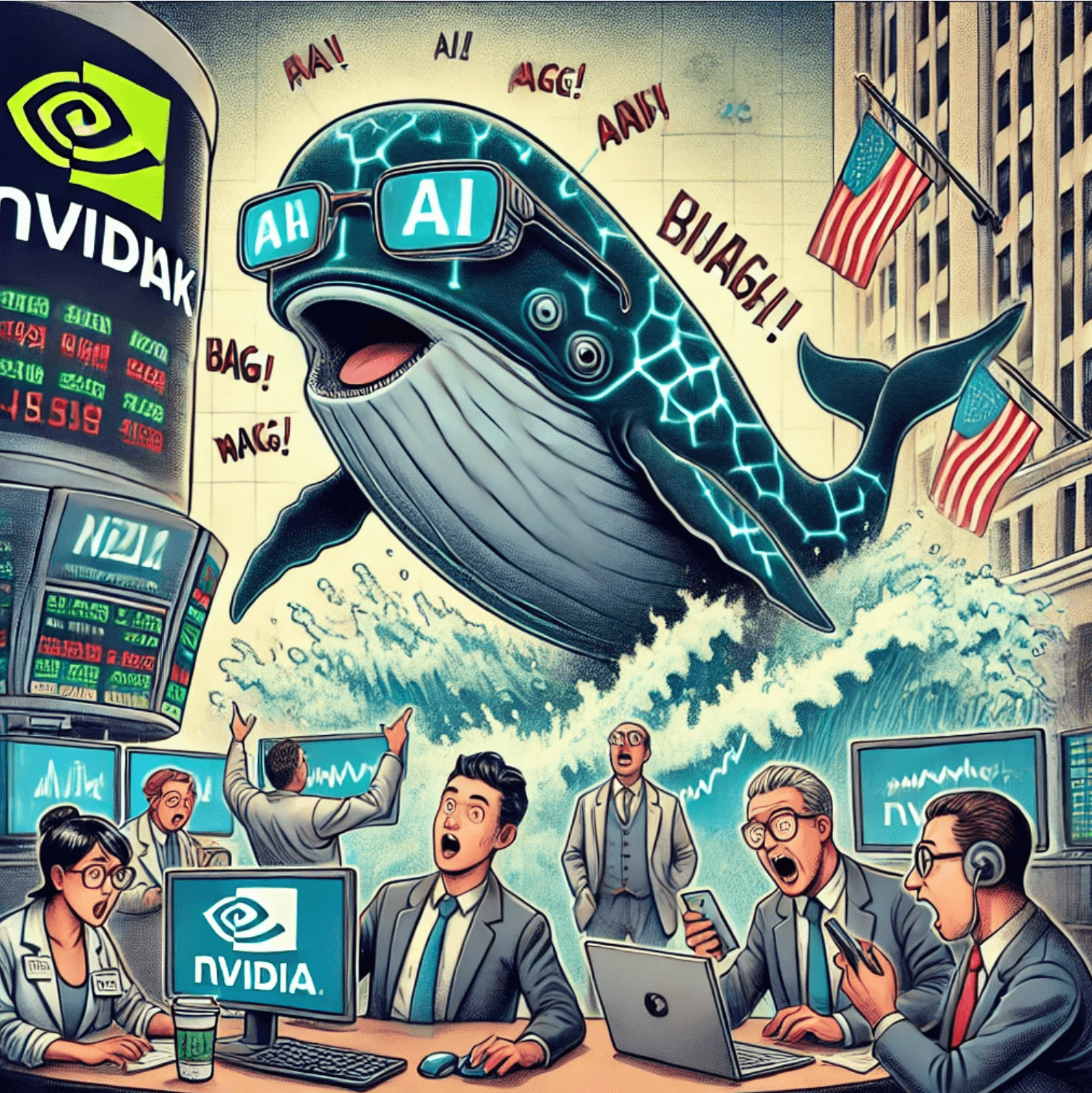
Feeling NVIDIA FOMO? Strap in—DeepSeek’s sudden arrival not only rattled the markets but also sparked an AI free-for-all, leaving me wishing I’d bought those call options!
State of AI (Early 2025) - DeepSeek Deep Dive 🐳
Introduction
This post kicks off what I'm calling my unofficial "State of AI" series, where I explore some of the most intriguing topics in artificial intelligence at the moment. AI has felt like such a mess lately that I’ve personally been craving some focus—hence, I'm writing!
Initially, I planned to cover a few different AI developments (DeepSeek wasn’t even in my top three!), but over the past few days, DeepSeek has exploded onto the scene, sending US markets into a frenzy (hello, NVIDIA!) and raising countless questions.
In this post, I'll give a quick overview of DeepSeek, explain why it's making headlines, and share my thoughts on what it means for AI, open-source models, and the ongoing "trust" dilemma we face with AI technology.
Also just to be explicit since I find it a bit confusing - when I say "DeepSeek" I'm using it as I think most people are, which is kinda incorrectly as I'll be referring to both the model, DeepSeek Coder, and the company itself, DeepSeek.

DeepSeek's Meteoric Rise
What the hell is a DeepSeek?
DeepSeek is an emerging AI model that seemed to take the world by storm in late January 2025. It quickly sparked excitement and concern—especially once the markets began reacting. Some analysts even attribute the tanking of US markets around January 27, 2025, at least in part, to the hype and uncertainty surrounding this model. Whether DeepSeek is the real deal or just another AI fad remains a hot topic of debate.
On a personal note, I was actually planning to write about DeepSeek last week, but it didn’t seem to be generating much interest at the time—little did I know the markets would go absolutely crazy this week! I really wish I had bought NVIDIA stock before DeepSeek's surge. Even modest call options might have turned into five-digit returns! (If you're curious about running the numbers, there's a neat options profit calculator you can play with.)
How Did DeepSeek Pull This Off?
DeepSeek’s creators claim to have trained the model with roughly 2,000 NVIDIA H800 GPUs, spending "only" about ~$6 million.
Many experts in the industry suspect this figure refers to training costs alone rather than total hardware and infrastructure expenses. That said, it’s still an unusually low cost compared to large-scale models from OpenAI, Anthropic, and others.
Some key optimizations that DeepSeek claims to have used include:
- Novel Model Architecture Optimizations
- Sparse Attention Mechanisms: Some reports suggest that DeepSeek uses a more selective attention mechanism to reduce memory usage and FLOPs. However, official documentation on whether this is a true "sparse" implementation (versus standard attention pruning) is not publicly confirmed.
- Dynamic Layer Skipping: It’s reported that certain layers can be bypassed when input complexity is low, but there is no direct evidence in publicly available papers or official releases. If true, this technique might be similar to conditional computation strategies found in other large-scale models.
- Highly Targeted and "Lossless" Data Pruning
- The model’s training data is believed to be curated to remove low-quality or redundant samples, which could improve efficiency. While this is frequently described as “lossless,” the exact pruning methodology and its empirical effects on model performance have not been independently verified.
- Selective Ultra-Low Precision
- DeepSeek is rumored to experiment with precision below FP16 (e.g., INT8) in parts of the pipeline. However, official disclosures indicate standard mixed-precision training (FP16 or BF16). Any use of INT8 or INT4—especially for training—remains speculative and may be limited to inference optimizations if it exists at all.
- Distributed, Fault-Tolerant Training on Heterogeneous Hardware
- DeepSeek reportedly employs a robust distributed training setup that can handle nodes of varying capabilities without halting or significantly degrading performance. While some sources describe this as using "crippled" hardware, publicly available information suggests that DeepSeek relies on standard fault-tolerance and data-parallel strategies common in large-scale HPC environments.
I'll be honest, I’m not the best person to confirm or explain most of this, but if you're interested, I found these articles insightful:
- The DeepSeek Hype from the Perspective of an AI Hobbyist
- How Exactly is DeepSeek So Cheap? - Some funny (and heated) takes in the comments
Also, this NBC News article does a good job comparing DeepSeek's actual performance to other models.
Open Source vs. Proprietary Models
DeepSeek has reignited the debate around open-source AI. Historically, open-source models have lagged behind big corporate efforts (OpenAI, Anthropic, etc.), but DeepSeek challenges the idea that you need massive corporate backing to achieve cutting-edge results.
However, this raises big questions:
- What does "open source" really mean for large language models? Unlike code, you can’t simply "read" an LLM's weights the way you do source code. Sharing a model allows for use, fine-tuning, or modification, but it still lacks the transparency of traditional open-source software.
- How do open-source models compare to commercial offerings? OpenAI, Anthropic, and others are shifting toward product-driven strategies. It remains to be seen how they'll respond to open-source models offering comparable capabilities with lower costs and more flexibility.
Speaking of commercial offerings, a bit of a hot take 🌶️: OpenAI (which calls itself an "AI research and deployment company" on its about page) is quietly pivoting toward product-driven ventures. Just look at their new "Operator" platform—incredibly interesting, but only available to research users for $200/month? Even then, Sam Altman claims they’re offering it at a loss. This only makes sense if they truly believe their models are vastly superior to the competition.
I also think it's worth mentioning Meta here as "the other" major open-source AI player.
Their Llama models are considered pretty good if not a step behind, but they've been pretty supportive of the open-source community and Deepseek. Just checkout this tweet from Yann LeCun Meta's incredibly popular AI researcher, if nothing else being a bit supportive of DeepSeek's contributions.
Granted many have critiqued Meta's usage of the label "open-source" but that's a blog post in itself.
Implications Going Forward
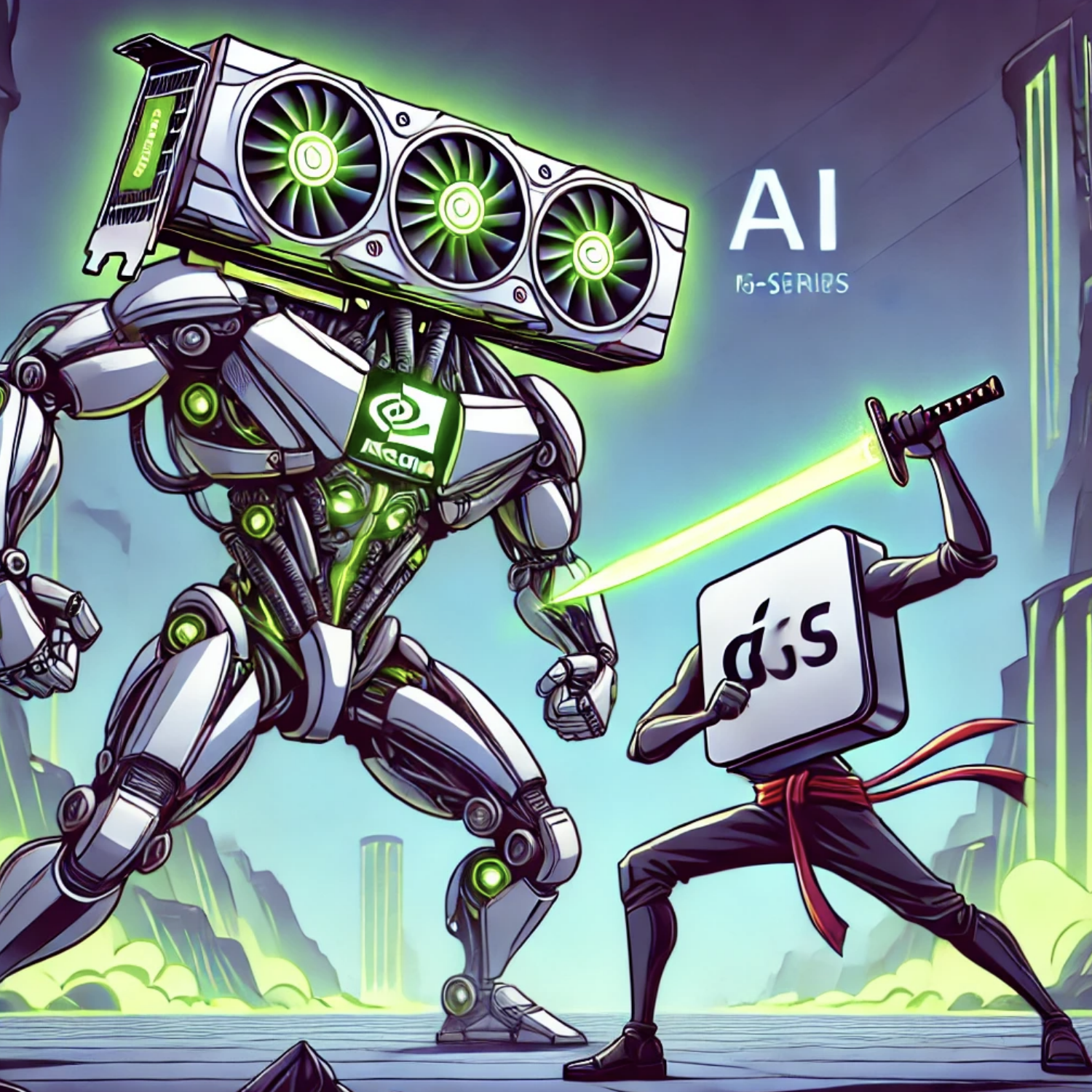
Beyond open-source vs. proprietary AI, DeepSeek raises broader questions:
- Market and Hardware Impact - Will NVIDIA continue to dominate AI hardware, or will alternative chips like Apple’s M-series challenge its dominance?
- National Security Considerations - Does DeepSeek’s success indicate that advanced AI can be built on "prev-gen" hardware, making export restrictions less effective?
- Focus on Applications vs. Model Building - As more open-source foundation models emerge, will innovation shift toward building specialized applications instead of creating new foundational models?
Trust in AI Models
One of my biggest takeaways lately—something I planned to write about before DeepSeek blew up—is the issue of trust in AI.
- AI Accuracy and Reliability - AI is only as valuable as it is trustworthy. If an AI fails even once in a critical scenario, user trust can evaporate.
- Provenance and Ethics - Do you know where your model’s data comes from? Can you trust how it was curated?
- US vs. International AI Development - DeepSeek’s rise has some in the US nervous about foreign AI dominance. Meanwhile, US-based AI companies face scrutiny over their pricing models and business practices.
Should You Use DeepSeek?
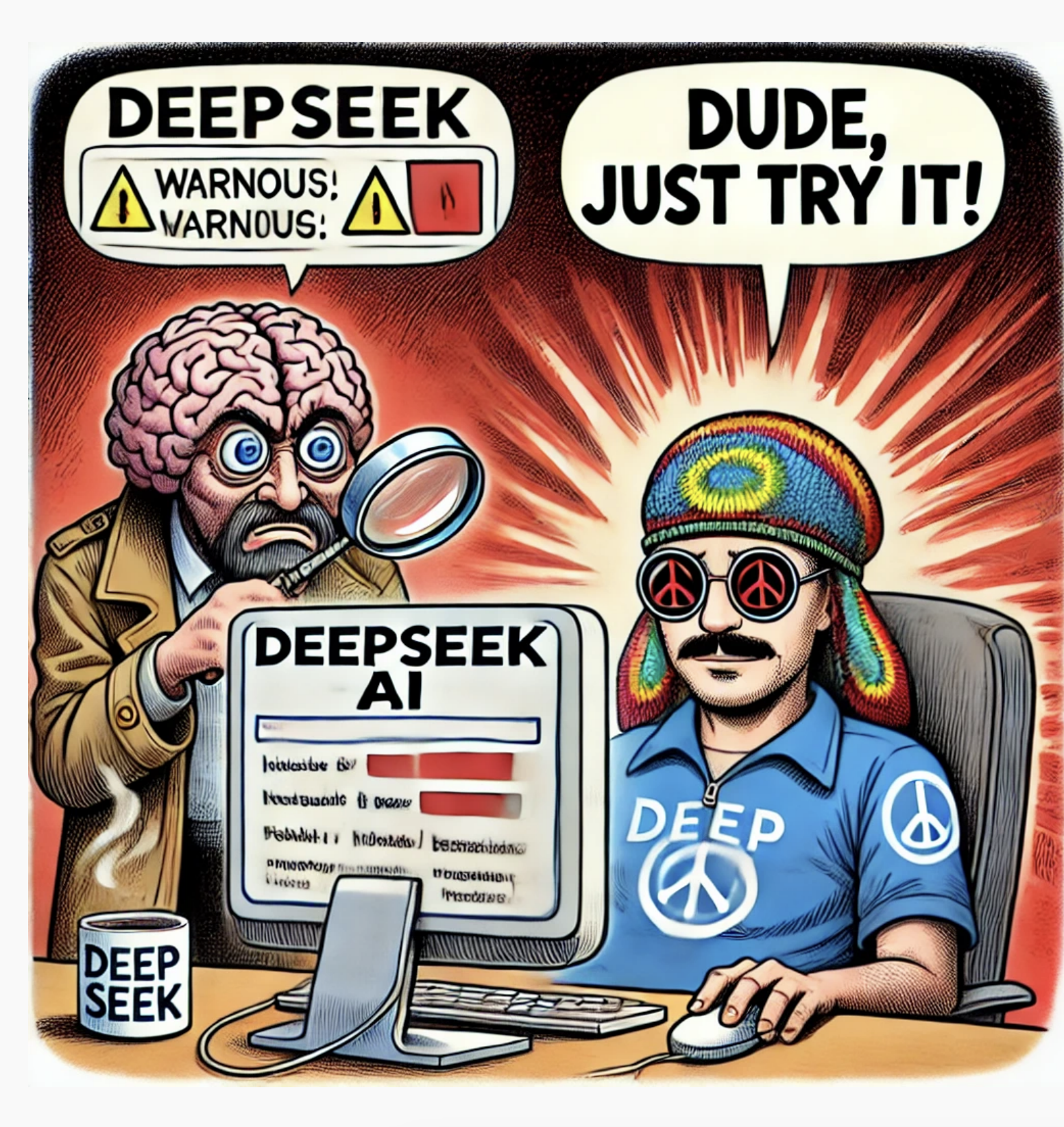
It depends—do you trust it?
If you're running a company or handling enterprise data, I’d say absolutely not.
For individuals, it's a personal choice.
From a security perspective, do you trust Chinese AI more than US AI?
From a performance perspective, DeepSeek seems close to GPT-4o, but there’s evidence of "Chinese bias".
Personally, I’m sticking with GPT Pro. I may test DeepSeek, but I don’t trust it on my personal devices—I barely trust existing models as is.
Worth shouting out the funny AI images in my posts are almost always from ChatGPT!
Conclusion
DeepSeek’s rise is another reminder of how fast the AI landscape shifts. Whether you view DeepSeek as a genuine breakthrough or just another headline, I think it raises some tough questions:
- How do we keep AI both open and trustworthy?
- Will we see more large-scale open-source challengers to corporate AI?
- What role should governments play in regulating AI?
There are no easy answers, but one thing is clear: AI is evolving faster than ever—and we should all keep an eye on where it goes next.
Thanks for reading! Leave a comment or message me through the channels below if you have any thoughts or questions!
Comments
No comments available :/
Leave your thoughts! 💭
Tags
DeepSeek
Gen AI
Meta
ML/AI
State of AI (Early 2025)

Version Unavailable
/
unavailable
Copyright 2026 © Naztech Inc. and Daniel Nazarian